
Automatic shades have become one of the quieter status symbols in luxury residential design, and it is easy to see why. Homeowners across Scarsdale, Bronxville, Alpine, Wyckoff, and Essex Fells are increasingly moving away from traditional manual window treatments, not because motorized shades are a novelty, but because they solve real problems that manual solutions simply cannot. Still, the choice between the two is worth thinking through carefully. Here is an honest comparison from our perspective, having integrated window treatment systems into luxury homes across North and Upper-Central New Jersey and the greater New York area for over two decades.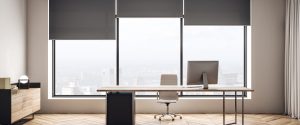
What Manual Window Treatments Do Well
Let us give credit where it is due. Manual shades, draperies, and blinds have been refined over centuries. A beautifully crafted Roman shade or a set of custom linen drapes can be stunning, and in rooms where the treatment is purely decorative, there is nothing wrong with pulling a cord or turning a rod by hand. Manual treatments are mechanically simple, they require no programming, and they do not depend on any infrastructure in the walls.
For a secondary guest room or a space that rarely needs adjustment, manual window treatments are a perfectly reasonable choice. The challenge comes when you have a home with many windows, high ceilings, south-facing glass that pours in afternoon sun, or a design vision that calls for every element of the room to work together. That is where manual treatments begin to show their limits.
Where Automatic Shades Change the Experience
The most immediate difference is convenience, but that word undersells it. In a home in Paramus or Ridgewood with floor-to-ceiling windows in the living room and a wall of glass in the primary suite, adjusting each shade manually throughout the day becomes a chore. Motorized shades let you set schedules so the shades rise with the morning light and lower as the afternoon sun shifts, without anyone touching a button. You can also adjust every shade in the house from a single control point, whether that is a Crestron or Control4 panel, a wall keypad, or your phone.
That integration is something manual treatments simply cannot offer. When shades become part of a whole-home automation system, they work alongside your lighting, HVAC, and AV equipment as a coordinated environment. A “good morning” scene might raise the shades in the bedroom, gradually bring up the lights, and start the news on the display in the kitchen, all triggered by a single tap. That kind of cohesion is something we design deliberately, working closely with the homeowner, their interior designer, and often the architect or builder from early in the project.
The Practical Argument for Going Motorized
There is also a practical case for automatic shades that goes beyond comfort. Consistent, programmed shading protects furniture, flooring, and artwork from UV damage in a way that manual treatments rarely achieve in real life, because people simply forget to adjust them during the day. In homes across Tenafly, Franklin Lakes, and Bronxville, where design investments run deep, that protection has real value.
Installation quality matters enormously here. Motorized shades need to be wired, programmed, and calibrated correctly. The shade fabric, the motor type, the pocket depth in the ceiling or window frame, and the integration with the rest of the home’s systems all need to be thought through before installation begins. When those details are handled properly from the start, the system works quietly and reliably for years. We have clients who have trusted us with their homes for nine years or more, and the systems we installed early on are still performing well because the design was sound from day one.
What Luxury Homes Are Actually Choosing
In our experience working on high-end residential projects throughout North Jersey, NYC, Scarsdale, and surrounding areas, the answer is almost always motorized shades, particularly in primary living spaces, home theaters, primary bedrooms, and any room with significant glass exposure. In some cases, a thoughtful hybrid approach makes sense: motorized shades for primary rooms and carefully selected manual treatments for secondary spaces where automation adds no meaningful benefit.
Brands like Lutron, which we work with regularly, offer motorized shade systems that are both reliable and exceptionally quiet. The fabric options and hardware finishes available in these systems are on par with the finest manual treatments, so there is no aesthetic compromise involved.
The real question is not whether automatic shades look good or work well. They do. The question is whether the system is designed and installed with the same care that went into every other detail of the home. That is the standard we hold ourselves to on every project.
If you are planning a new build, a renovation, or simply exploring whether motorized shades are right for your home in Wyckoff, Essex Fells, or anywhere across North and Upper-Central New Jersey and the New York area, we would love to talk it through. Give us a call or drop us an email and we are happy to answer any questions.